Electronic components: a key support for technological innovation
In today's highly digitalized and intelligent era, electronic components, as a key support for technological innovation, are playing an increasingly important role. These seemingly tiny components contain tremendous energy, driving technological progress and industrial upgrading in various fields.
Electronic components are widely used in numerous fields such as communications, computers, consumer electronics, automobiles, industrial control, and medical equipment. They are like the cornerstones of a science and technology building, laying a solid foundation for the vigorous development of modern science and technology.
In recent years, the electronic components industry has shown a vigorous development trend. In terms of technological innovation, new breakthroughs have been continuously achieved. First of all, the trend of miniaturization is becoming increasingly obvious. With the continuous advancement of technology, people have increasingly higher demands for the portability and integration of electronic devices. To meet this demand, electronic components are constantly evolving towards being smaller and lighter. For instance, today's integrated circuit chips can integrate billions of transistors in an extremely small space, and their degree of miniaturization is astonishing. This miniaturization not only makes electronic devices thinner, lighter and more portable, but also creates conditions for new application scenarios.
Secondly, performance improvement has become an important direction for the development of electronic components. With the rise of emerging technologies such as artificial intelligence, big data and the Internet of Things, higher requirements have been put forward for the processing speed, storage capacity and signal transmission quality of electronic components. To meet these demands, researchers are constantly exploring new materials and design schemes. For instance, new types of semiconductor materials can significantly enhance the performance of integrated circuits, making them more efficient when handling complex tasks. Meanwhile, high-speed communication chips can achieve faster data transmission speeds, providing strong support for real-time applications.
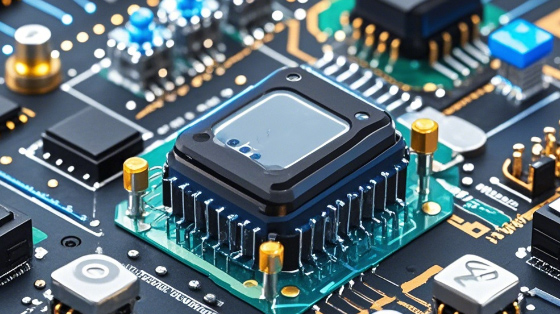
In terms of reliability, electronic components are also constantly improving. For some key fields, such as aerospace, medical equipment, industrial control, etc., the reliability of electronic components is of vital importance. Once a malfunction occurs, it may lead to serious consequences. Therefore, researchers are committed to enhancing the reliability of electronic components. Through strict quality control, optimized design, and the adoption of advanced manufacturing processes, they ensure that electronic components can operate stably in various harsh environments. For instance, in environments with high temperatures, high humidity, and strong vibrations, electronic components can still maintain good performance, providing a guarantee for the safe operation of the system.
The innovation of electronic components is also reflected in energy conservation and environmental protection. With the global emphasis on environmental protection, the electronic components industry is also actively exploring more energy-efficient and environmentally friendly solutions. For instance, low-power electronic components can reduce energy consumption and lower the operating costs of electronic devices. Meanwhile, some recyclable electronic component materials are gradually being applied, reducing pollution to the environment.
In addition, the intelligence of electronic components is also an important development trend. With the development of Internet of Things (iot) technology, an increasing number of electronic devices need to have intelligent functions. To meet this demand, electronic components are also constantly evolving towards intelligence. For instance, intelligent sensors can automatically monitor environmental parameters and collect data, and transmit the data to the cloud via wireless communication for analysis and processing. Intelligent chips can automatically adjust their working modes according to different application scenarios, enhancing the performance and efficiency of the devices.
The development of electronic components not only promotes technological progress but also brings huge opportunities for economic and social development. On the one hand, as an important component of the high-tech industry, the development level of electronic components is directly related to a country's scientific and technological strength and competitiveness. By increasing investment in the research and development of electronic components and enhancing independent innovation capabilities, the rapid development of China's technology industry can be promoted, and the transformation from "Made in China" to "Created in China" can be achieved. On the other hand, the wide application of electronic components has also driven the development of related industries, such as electronic manufacturing, communications, computers, and automobiles, providing a powerful impetus for economic growth.
However, the electronic components industry is also facing some challenges. First of all, the difficulty of technological innovation is constantly increasing. As the performance requirements for electronic devices continue to rise, higher demands are placed on the technical level of electronic components. R&d personnel need to constantly explore new materials, processes and design methods to meet market demands. This requires a large amount of capital and time investment, and also faces technical risks. Secondly, international competition is becoming increasingly fierce. Globally, the competition in the electronic components market is fierce, and all countries are increasing their support for the electronic components industry. China's electronic component enterprises need to constantly improve product quality and technological level to enhance their international competitiveness. In addition, intellectual property protection is also an important issue. The electronic components industry is a technology-intensive industry. The protection of intellectual property rights is of vital importance to the innovation and development of enterprises.
Facing these challenges, China's electronic components industry needs to take a series of measures. First of all, it is necessary to increase investment in research and development and enhance the capacity for independent innovation. The government and enterprises should make joint efforts to increase financial support for the research and development of electronic components, attract outstanding scientific research talents, strengthen cooperation among industry, academia and research, and promote technological innovation. Secondly, it is necessary to enhance international cooperation and introduce advanced technologies and management experiences. Through cooperation with internationally renowned enterprises, China's electronic component enterprises can learn advanced technologies and management methods, and enhance their own competitiveness. In addition, it is necessary to strengthen the protection of intellectual property rights and encourage enterprises to innovate. The government should enhance the enforcement of intellectual property rights, protect the legitimate rights and interests of enterprises, and create a favorable environment for innovation.
In conclusion, electronic components, as a key support for technological innovation, are playing an increasingly important role. In the future development, the electronic components industry will continue to face various challenges and opportunities. Through continuous innovation and efforts, China's electronic components industry is expected to occupy a more important position in global technological competition and make greater contributions to China's scientific and technological innovation and economic development.